
Slovenia Moves to Curb Mobile Phone Use in School
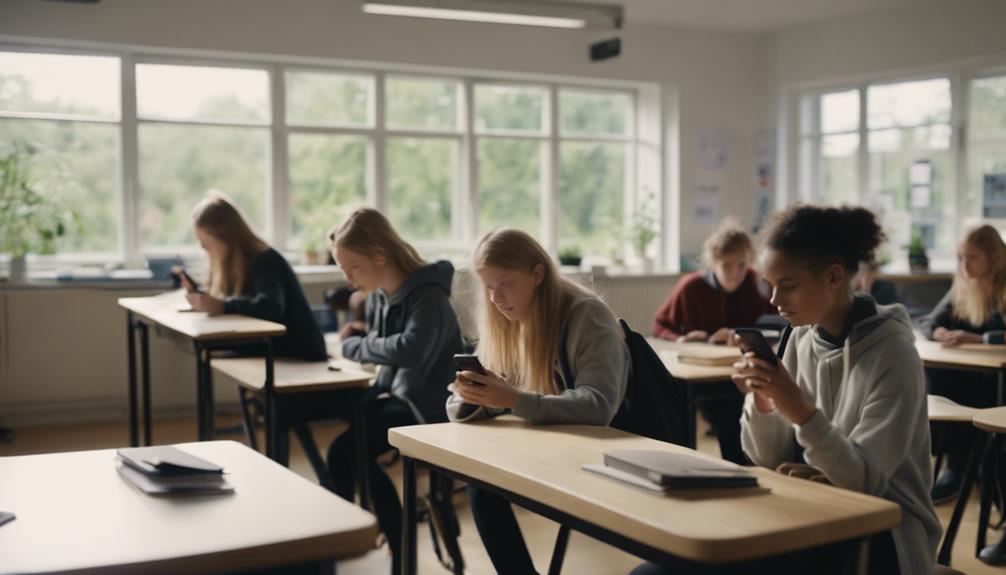
Across Europe, countries are grappling with how to manage mobile phone use in schools, and Slovenia is no exception. With the rising awareness of how constant screen exposure affects children’s concentration, mental health, and social development, Slovenia has taken a firm legislative step in 2025 to regulate smartphone use in primary schools.
A Legal Shift: Slovenia’s New Mobile Phone Law
On 4 July 2025, the Slovenian National Assembly passed amendments to the Primary School Act, introducing clear restrictions on mobile phone use in primary schools. The move marking the first time mobile phone use in schools was directly addressed by national legislation.
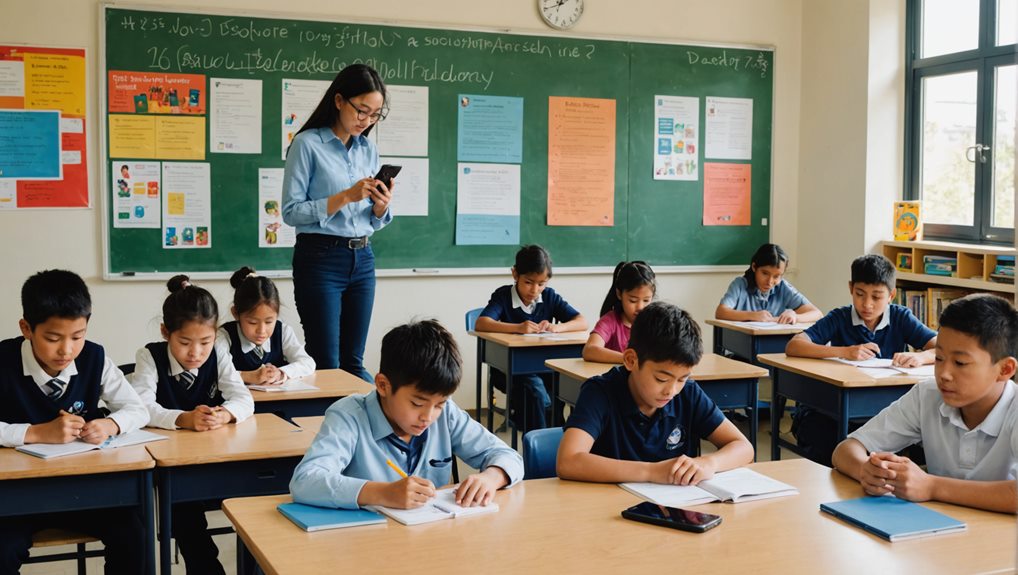
Under the new rules, primary school students (typically ages 6–15) are still allowed to bring mobile phones to school—but must store them in lockers upon arrival. They may only use phones in the classroom if a teacher explicitly permits it for educational purposes. This shift effectively limits unsupervised or casual phone use during the school day, without enforcing a full ban.
Notably, the law also grants teachers the right to search school bags if they suspect hidden devices, a clause that has raised discussions about privacy and student-teacher dynamics. However, the legislation passed without a single vote against it, signaling broad political and public support for stronger digital boundaries in learning environments.

The Power Behind the Petition: Odklopi.net and Public Support
While Slovenia’s new mobile phone law passed smoothly through Parliament, it didn’t appear out of nowhere. Much of the momentum behind the reform came from the growing public and expert concern, crystallized through the Odklopi.net initiative — a national campaign urging stricter phone policies in schools.
Odklopi.net, which means “disconnect” in Slovenian, gained serious traction in 2023 and 2024 as it collected signatures from doctors, psychologists, teachers, and parents. Their message was clear: unrestricted mobile phone use is having a measurable negative impact on children’s mental health, sleep, attention span, and overall wellbeing.
The petition was further strengthened by the endorsement of Slovenian President Nataša Pirc Musar, giving the initiative political weight and visibility. Experts cited concerns such as:
- Increased anxiety and distractionlinked to social media use during school hours
- Decreased face-to-face communicationamong students
- Difficulties managing cyberbullying and peer pressurein digital spaces
- Reduced academic performancelinked to fragmented attention
The petition and accompanying public discourse also emphasized the lack of consistent enforcement across schools. While some Slovenian schools had already adopted informal restrictions, others still allowed unrestricted access — resulting in confusion, inequity, and ongoing classroom management struggles.
A European Context: Slovenia Follows a Regional Trend
Slovenia’s new mobile phone law isn’t happening in isolation — it’s part of a larger European movement toward managing screen time in schools. Across the continent, countries are re-evaluating the role of mobile devices in education, driven by concerns over student mental health, academic focus, and classroom equity.
Several EU countries have already enacted stricter policies:
- France introduced a nationwide mobile phone ban in schools as early as 2018, with exceptions only for medical needs or approved educational activities.
- Italy, Spain, and Portugal have seen growing numbers of regional or school-led bans, with national authorities often encouraging stronger digital boundaries.
- In Germany, policies vary by federal state, but schools are increasingly adopting internal rules to limit unsupervised phone use.
- Most recently, Belarus announced that all schools will be officially mobile phone-free from September 2025.
Slovenia’s legislation now places it firmly in this growing bloc of countries taking proactive steps to curb the distractions associated with digital devices during the school day — without fully banning technology in learning.
Still, as many European schools have discovered, policy alone is not enough. What truly makes a difference is how these rules are applied, and whether schools have access to practical tools that help enforce limits without undermining student autonomy or trust.

PhoneLocker®: A Practical Solution for Slovenian Schools
Now that Slovenia has introduced new rules around mobile phone use in primary schools, the next challenge is putting those rules into practice. The law requires students to leave their phones in lockers and only use them when a teacher allows it, but it doesn’t give schools a step-by-step method. That means teachers are still left to manage the day-to-day enforcement — which can lead to stress, inconsistency, and conflict.
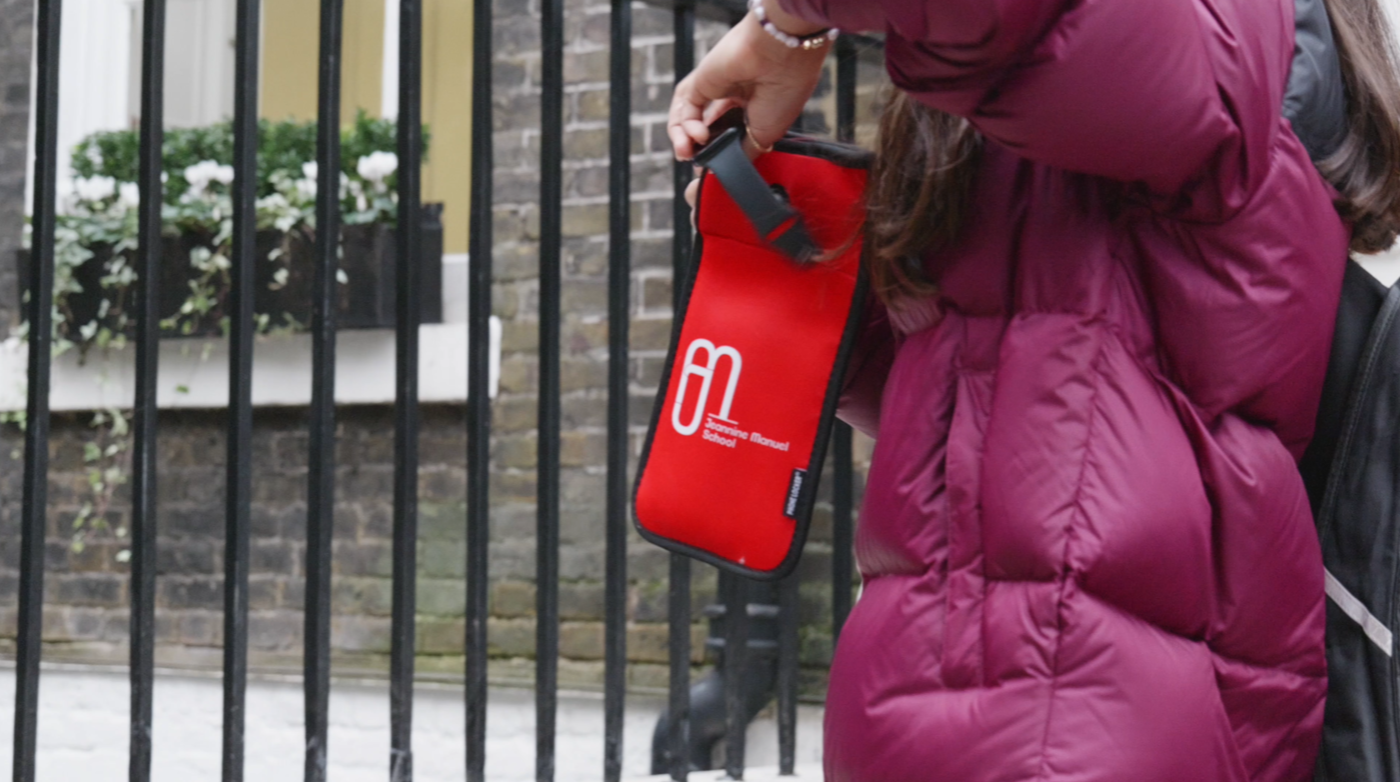
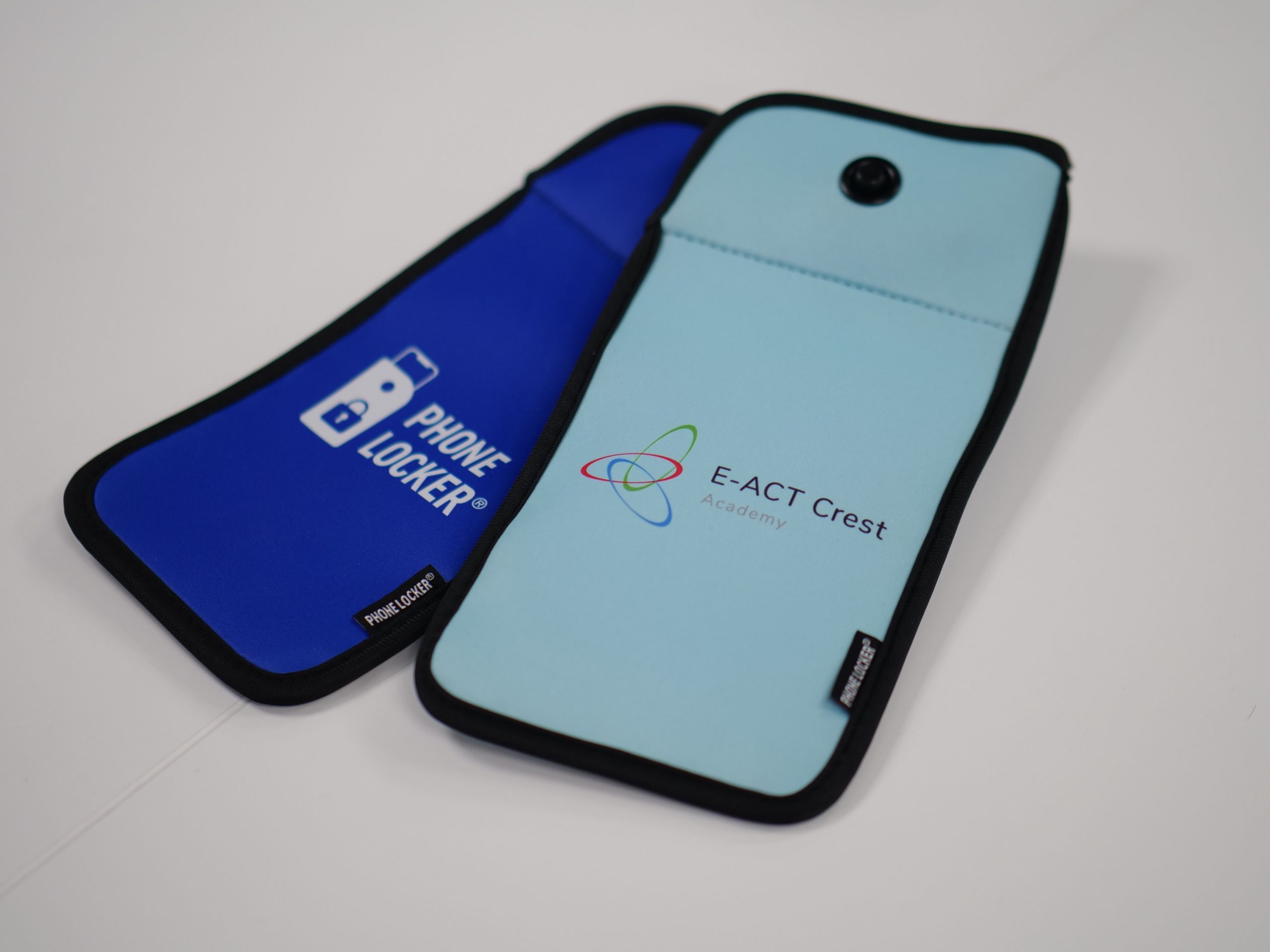
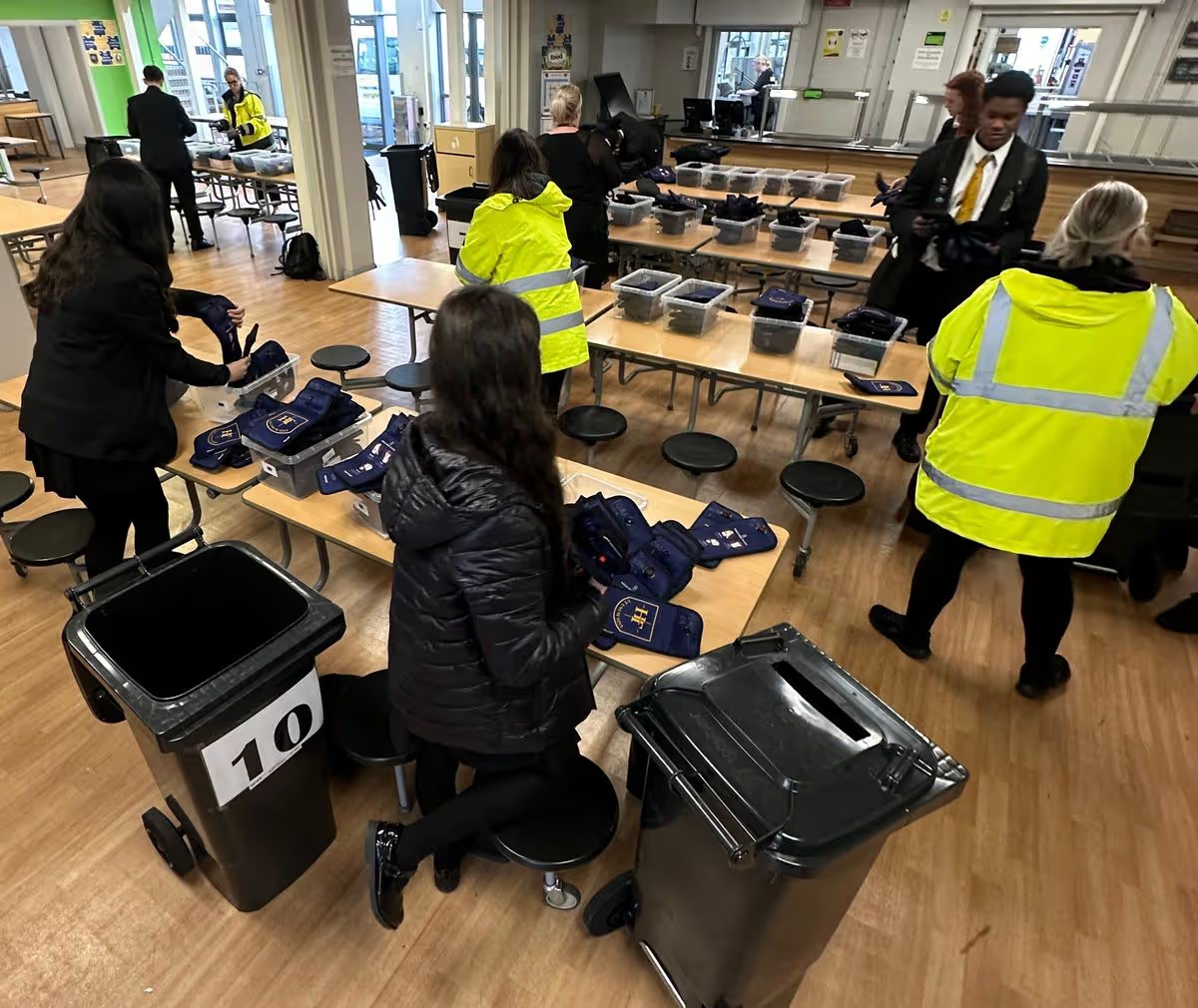
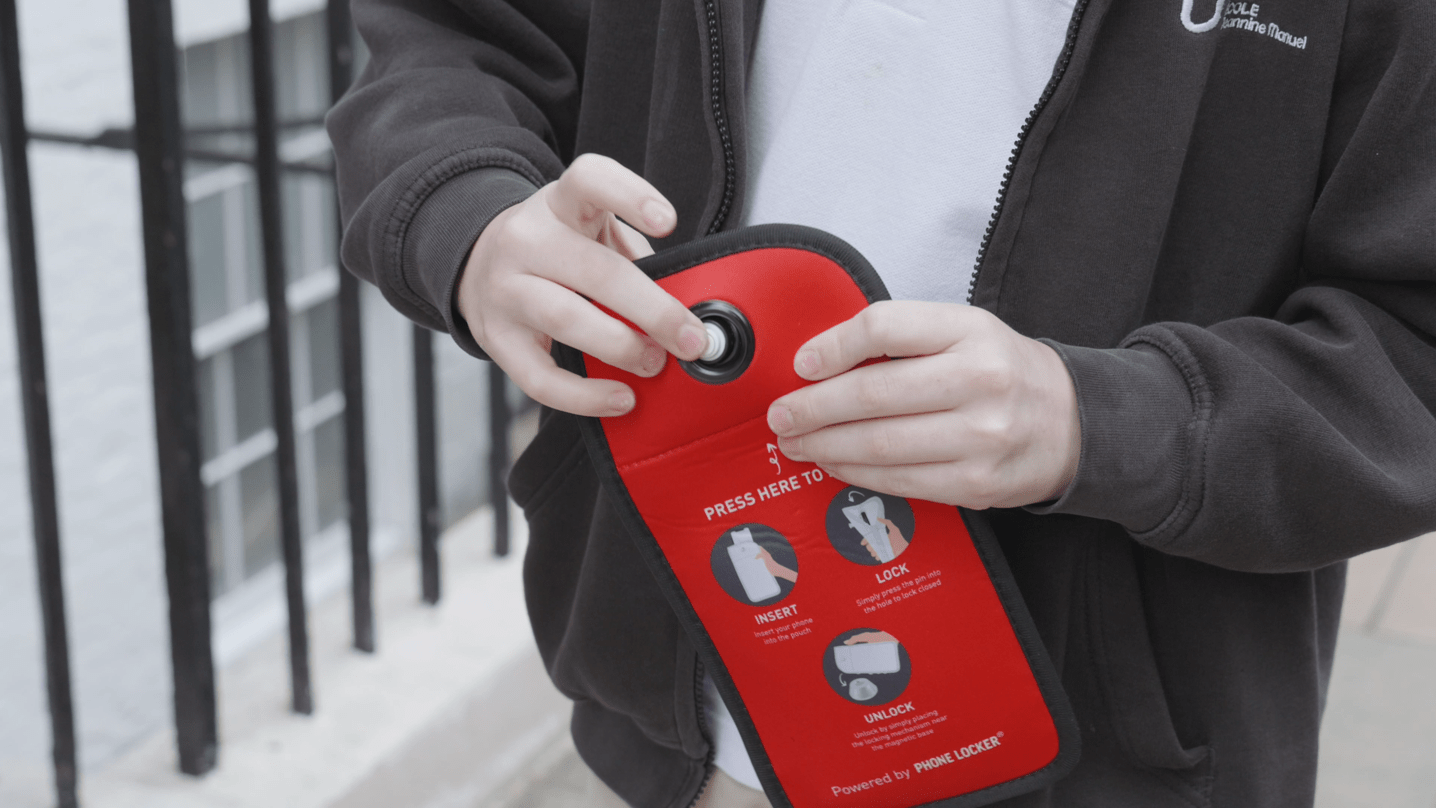
PhoneLocker® offers a simple, respectful solution. Instead of asking staff to confiscate devices or search bags, schools give each student a lockable phone pouch. Students place their phones inside the pouch and lock it at the start of the school day. The pouch stays with them, but it can’t be opened without a special magnet that only teachers have access to.
This system makes it easy to follow the rules. It keeps students’ phones safe and with them, but out of use during lessons — without any arguments or distractions. It also helps schools avoid problems with lost phones or complaints from parents.
PhoneLocker® is already used in schools across more than 20 countries. It’s proven to reduce phone use during school hours and make classrooms calmer and more focused. We also help schools roll out the system smoothly, offering full support to staff, students, and families.
Conclusion
Slovenia’s decision to tighten mobile phone use in primary schools reflects growing awareness of how digital distractions affect learning. With teachers and parents largely in agreement that something needed to change, this new legislation marks an important shift toward more focused, healthier school environments.
But success won’t just depend on the law—it will depend on how schools enforce it day-to-day. That’s where practical tools like PhoneLocker® make all the difference.
If your school is exploring ways to manage phone use fairly and effectively, we’re here to help. At PhoneLocker®, we provide not just secure technology, but guidance and support for smooth implementation tailored to your school’s needs.
Let’s make classrooms distraction-free—together.
→ Learn more about how PhoneLocker® works, or get in touch with our team for a free demo.



 English
  Spanish
  Portuguese
  French
  Italian
  German
  Chinese