Mobile Phone Use in Georgia (Country) Schools
When it comes to mobile phone use in schools, many European countries have already taken decisive steps. France introduced a nationwide classroom ban in 2018, Turkey followed with a sweeping policy in 2025, and Slovenia has tightened restrictions in recent years. But what about Georgia (country) — the Caucasus nation at the crossroads of Europe and Asia?
Unlike its European neighbors, Georgia has no national law banning mobile phones in schools. Instead, decisions are left to individual schools, where some implement strict rules on devices during lessons while others allow limited use if it does not disrupt learning. This unique situation makes Georgia an important case study: a country balancing the push for digital modernization in education with growing global concerns about distraction, screen time, and student wellbeing.
As debates over classroom technology continue across Europe, Georgia (country) finds itself at a crossroads. Should it follow the regional trend and introduce a nationwide phone ban, or continue leaving decisions to schools? And how can solutions like PhoneLocker help Georgian schools prepare for the future?
Current Situation in Georgian Schools
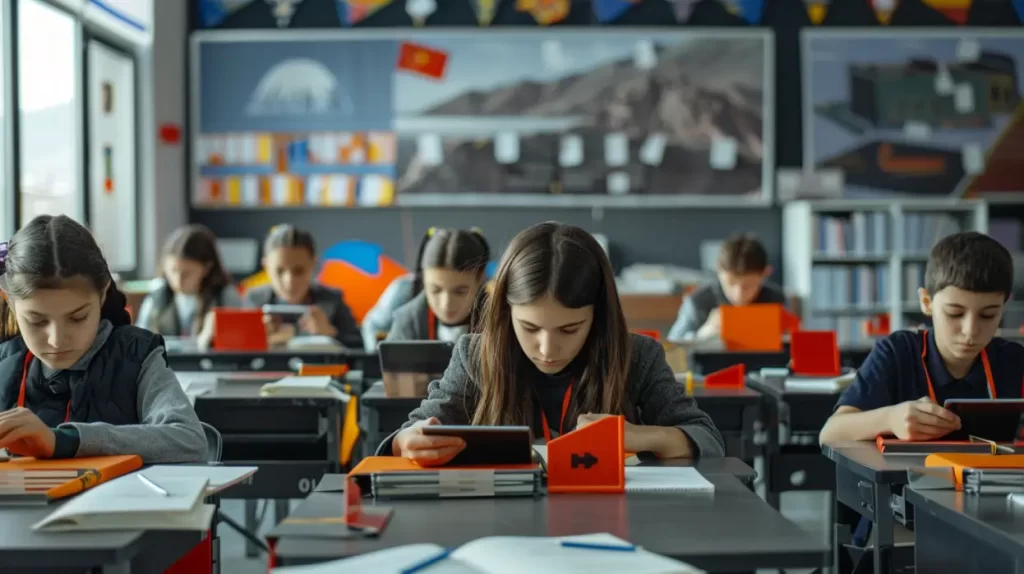
At present, Georgia (country) does not have a nationwide mobile phone ban in schools. The Ministry of Education has not introduced legislation like Turkey or France, leaving each school to decide how to manage personal devices.
This means that policies vary widely across the country:
-
Some schools prohibit phones during lessons or require them to be turned off and stored away.
-
Others allow limited use, especially if phones are needed for educational purposes or emergencies.
-
Enforcement is typically handled at the school level, often relying on teachers and administrators to monitor compliance.
While the lack of a uniform national rule offers flexibility, it also creates challenges. Parents and students often face different expectations depending on the school or even the teacher. This inconsistency has sparked conversations about whether Georgia (country) should eventually follow the path of other European nations by adopting clearer, nationwide standards.
For now, the reality in Georgian classrooms is a patchwork of school-level policies, reflecting both the growing role of digital tools in education and concerns about distraction and screen time.
Why Georgia Hasn’t Introduced a Nationwide Ban Yet
While many European countries have adopted strict classroom phone policies, Georgia (country) has so far avoided passing a national ban. Several factors explain this approach:
-
Focus on Digital Modernization: Georgia has been investing heavily in digital infrastructure for education, aiming to expand access to technology in schools. A blanket phone ban might appear to contradict this modernization drive.
-
Decentralized Decision-Making: Education policy often allows schools and local administrators significant autonomy. Rather than imposing a single national rule, the government has left room for schools to decide what works best in their context.
-
Balancing Access and Restriction: In some areas, particularly rural regions, mobile phones can serve as learning tools or even essential communication devices. Policymakers may hesitate to remove this flexibility without robust alternatives.
-
Limited Public Pressure: Unlike in France or Turkey, there has not yet been a strong public movement in Georgia demanding a national ban. Parents, teachers, and policymakers remain divided on whether the benefits outweigh the drawbacks.
As a result, Georgia’s approach has been more cautious, emphasizing school-level discretion rather than sweeping national reforms. However, growing debates on digital distraction and student wellbeing suggest that this may not remain the case forever.
Growing Concerns: Digital Distraction and Student Wellbeing
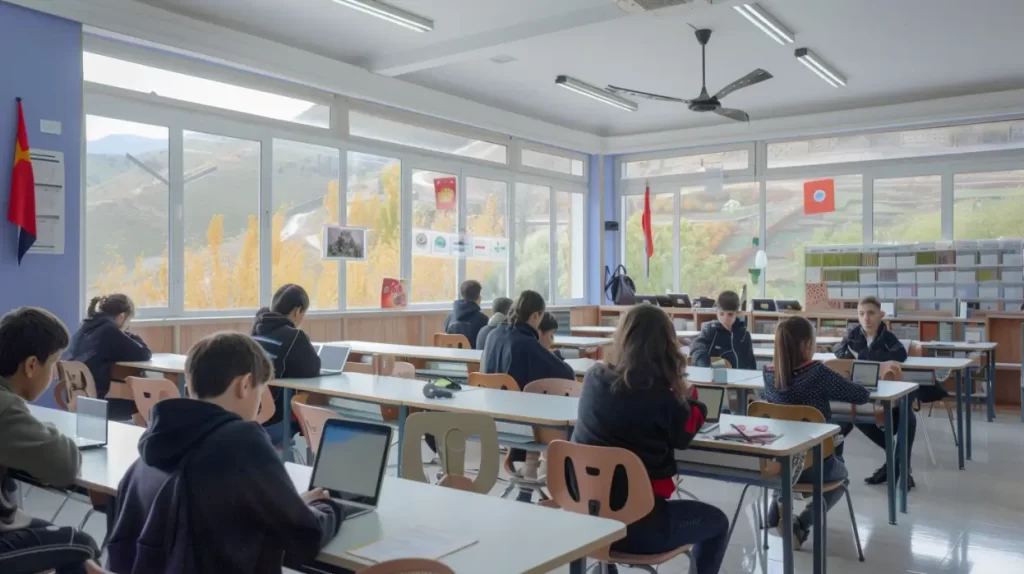
Even without a nationwide policy, the conversation around mobile phones in Georgian classrooms is gaining momentum. Educators and parents are becoming increasingly aware of the challenges that constant connectivity poses for learning and mental health.
-
Digital Distraction: Teachers report that students often struggle to focus when phones are within reach, with notifications and social media competing for attention during lessons.
-
Mental Health and Screen Time: Global studies, including research cited by Common Sense Media, highlight the link between heavy phone use and issues such as anxiety, sleep disruption, and reduced face-to-face interaction. These concerns resonate in Georgia as well, especially among parents.
-
Classroom Discipline: Phones can fuel problems beyond distraction, including cheating, cyberbullying, and classroom disruption — issues that Georgian schools are not immune to.
-
European Influence: With neighboring countries like Turkey, France, and Slovenia enforcing strict bans, Georgia (country) is increasingly exposed to the argument that restrictions improve focus and academic outcomes.
As a result, many in the education sector are asking whether Georgia should take stronger measures to create distraction-free learning environments. While the debate is still young, the international momentum makes it likely that Georgia will face growing pressure to act.
How PhoneLocker Can Support Georgian Schools
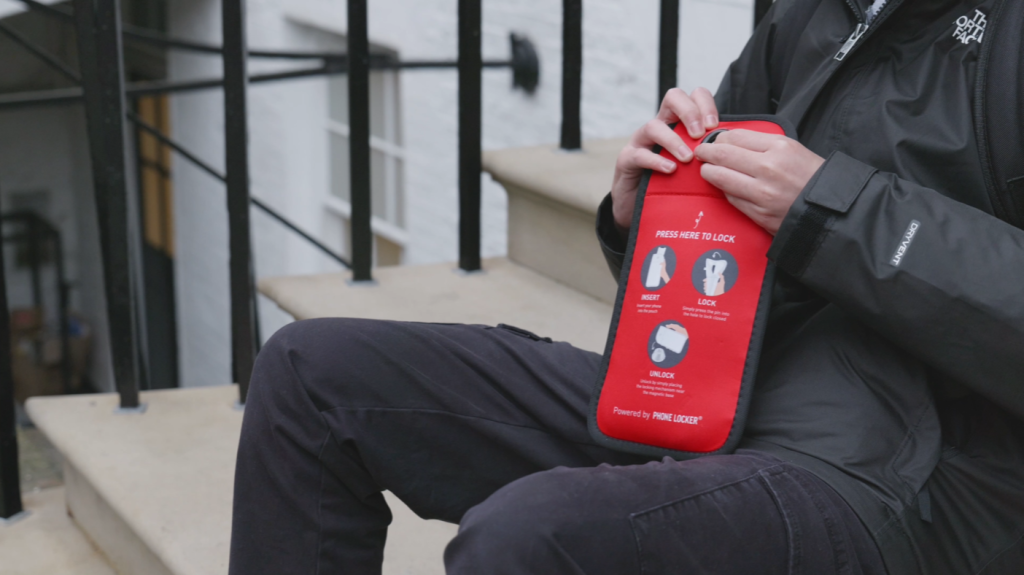
At PhoneLocker, we believe Georgian schools deserve a practical, conflict-free way to manage mobile phones — even without a national ban in place. That’s why we provide secure storage solutions that help schools create focused learning environments while keeping parents and students reassured.
-
Secure Device Storage
With our lockable pouches and storage systems, students keep their phones safe but inaccessible during class. Devices remain with the student, reducing liability for schools, while ensuring they don’t disrupt learning. -
Support for Teachers
Teachers shouldn’t have to spend valuable teaching time policing mobile phone use. PhoneLocker makes enforcement simple, consistent, and non-confrontational, allowing educators to focus on what they do best — teaching. -
Peace of Mind for Parents
Parents can rest easy knowing their child’s phone is secure during the day but still available when permitted. It’s the perfect balance between safety and structure. -
Proven Worldwide
PhoneLocker solutions are already in use across more than 20 countries, helping schools everywhere reduce digital distraction without conflict. Georgian schools can benefit from this global experience while tailoring the solution to their own needs.
By introducing PhoneLocker, schools in Georgia can get ahead of the curve. Even in the absence of a national ban, educators can ensure classrooms remain distraction-free while maintaining flexibility and trust among students, parents, and staff.
Explore how Phonelocker works →
Conclusion
While Georgia (country) has not yet implemented a national mobile phone ban in schools, the conversation around digital distraction and student wellbeing is gaining momentum. Individual schools are already experimenting with internal policies, but a clear, consistent approach could help ensure all students benefit from a focused learning environment.
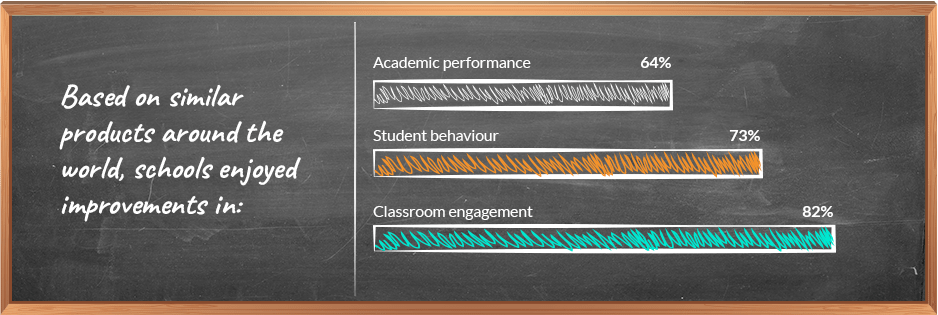
As European neighbors like Turkey, France, and Slovenia demonstrate, restricting phone use in classrooms can improve attention, classroom dynamics, and overall learning outcomes. Georgian schools have the opportunity to adopt best practices proactively — and that’s where PhoneLocker comes in.
By using PhoneLocker’s secure and flexible solutions, schools in Georgia can reduce distractions, support teachers, and provide parents with peace of mind — all while keeping students’ devices safe and accessible when appropriate.
Equip your school with PhoneLocker to create distraction-free classrooms, enhance student focus, and simplify phone management. Contact us now to see how PhoneLocker can work for your school.




 English
  Spanish
  Portuguese
  French
  Italian
  German
  Chinese