

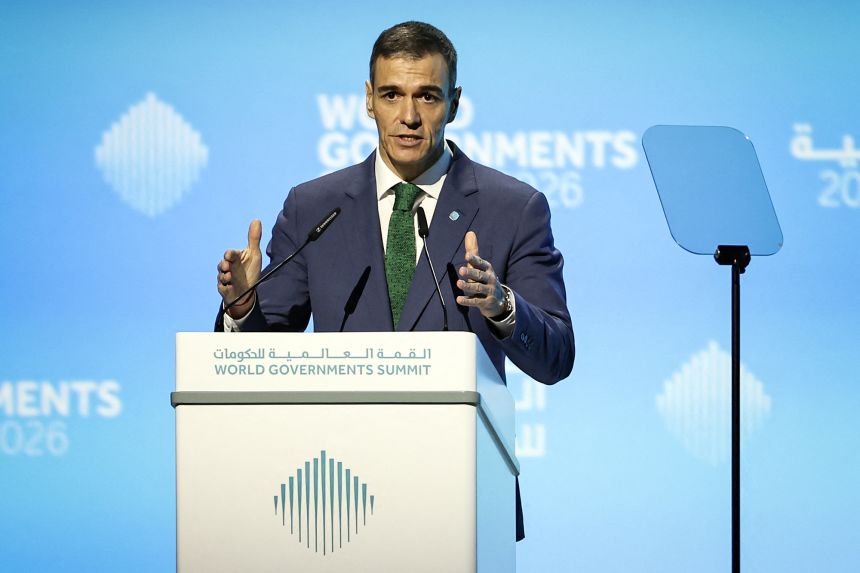
Le Premier ministre espagnol, Pedro Sánchez, a annoncé que son gouvernement allait interdire l'accès aux réseaux sociaux aux enfants de moins de 16 ans sur l'ensemble du territoire, afin de créer un environnement numérique plus sûr pour les jeunes. Cette annonce a été faite le mardi 3 février 2026 lors du Sommet mondial des gouvernements à Dubaï, où M. Sánchez a présenté une série de mesures visant à renforcer le contrôle des plateformes numériques.
Que dit la proposition
Selon la politique proposée, les enfants de moins de 16 ans se verraient interdire l'accès aux plateformes de médias sociaux telles que TikTok, Instagram, Snapchat et autres, sauf s'ils réussissent des contrôles d'âge rigoureux. Ces contrôles devraient aller au-delà de la simple déclaration de l'âge et s'appuyer sur des systèmes confirmant formellement l'âge de l'utilisateur avant d'autoriser l'accès.
Sánchez a décrit cette nouvelle mesure comme nécessaire pour protéger les enfants des contenus nuisibles et de l'environnement incontrôlé des plateformes sociales actuelles.
“ Nos enfants sont exposés à un espace qu’ils n’étaient pas censés explorer seuls… Nous les protégerons du Far West numérique ”, a-t-il déclaré lors du sommet.
Contexte et réglementation numérique au sens large
Cette annonce espagnole s'inscrit dans le contexte d'efforts internationaux similaires visant à réglementer les médias sociaux et à protéger les jeunes en ligne :
- L'Australie a mis en œuvre en décembre 2025 la première interdiction nationale au monde des médias sociaux pour les moins de 16 ans, en vertu de sa loi modifiant la loi sur la sécurité en ligne (âge).
- La France a récemment approuvé une loi interdisant l'accès aux réseaux sociaux aux moins de 15 ans et imposant des systèmes de vérification de l'âge, dans le cadre de réformes plus larges sur la sécurité en ligne.
- Plusieurs autres pays européens, dont le Danemark et le Royaume-Uni, discutent activement ou élaborent des restrictions d'âge numérique.
Sánchez a également déclaré que son gouvernement prévoyait de présenter un projet de loi visant à responsabiliser juridiquement les dirigeants des réseaux sociaux quant aux contenus illégaux et haineux, et même à criminaliser la manipulation algorithmique et l'amplification de contenus illicites.
Objectifs et justification
Les autorités espagnoles affirment que cette politique est une réponse à l'ampleur des contenus préjudiciables en ligne, notamment les discours haineux, la désinformation et les contenus à caractère sexuel. L'obligation pour les plateformes de vérifier l'âge avant d'autoriser l'accès vise à réduire l'exposition des mineurs à ces risques – une mesure qui, selon le gouvernement, s'inscrit dans le cadre plus large des protections numériques pour les enfants actuellement débattues au Parlement.
Que va-t-il se passer ensuite ?
La mesure annoncée par Sánchez devra être formellement rédigée en loi, puis débattue et approuvée dans le cadre du processus législatif espagnol. Si elle est adoptée, l'Espagne deviendrait l'un des premiers grands pays européens à limiter l'accès aux réseaux sociaux aux seuls adolescents plus âgés.
Les modalités de mise en œuvre — notamment la manière dont les plateformes vérifieront l'âge et dont la loi sera appliquée — devraient être élaborées dans le cadre du prochain projet de loi, qui, selon les responsables gouvernementaux, sera présenté dans les semaines à venir.
Cette évolution reflète une tendance mondiale plus large visant à renforcer la protection numérique des enfants. Dans de nombreux pays, les autorités s'efforcent de trouver un équilibre entre le libre accès aux outils numériques et les préoccupations liées à la santé mentale, à la sécurité et à la maturité des enfants. Si les modalités varient selon les juridictions, l'interdiction proposée par l'Espagne pour les moins de 16 ans – si elle était adoptée – constituerait l'une des mesures les plus ambitieuses à ce jour, influençant les débats en cours dans les milieux de l'éducation, des politiques publiques et des familles sur la manière dont la société favorise un développement numérique sain.








 French
  English
  Spanish
  Portuguese
  Italian
  German
  Chinese