

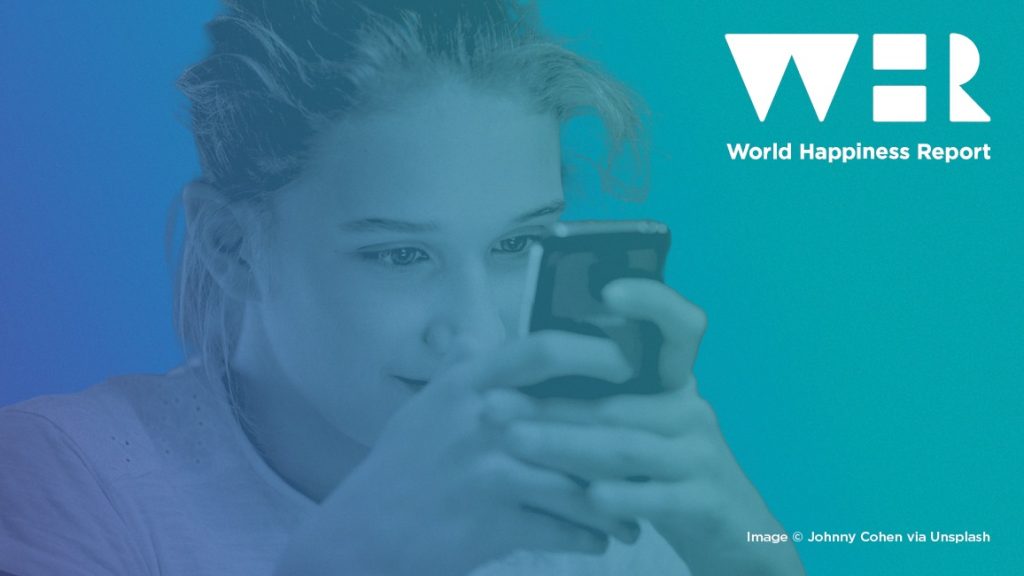
The latest World Happiness Report 2026 has brought a clear message into focus: while global happiness remains relatively stable, young people’s wellbeing is declining — and social media is a growing part of the conversation.
For schools, workplaces and society more broadly, the findings highlight an important shift. The issue is no longer just how much technology we use, but how it is shaping our attention, relationships and overall happiness.
A Global Snapshot of Happiness
The 2026 report continues to rank Nordic countries among the happiest in the world, with Finland holding the top position for the ninth consecutive year.
But beneath the surface, there’s a more complex story — particularly among younger generations.
- Life satisfaction among under-25s has fallen significantly in English-speaking countries over the past decade
- In contrast, youth wellbeing has remained stable or improved in other regions
This divergence has led researchers to look more closely at one common factor: social media use.
Le lien entre les réseaux sociaux et le bonheur
One of the most striking insights from the World Happiness 2026 report is how levels of social media use correlate with wellbeing.
- Happiness is highest at low levels of social media use and declines as usage increases
- Teenagers using social media for 7+ hours per day report significantly lower wellbeing than those who use it less
- Girls using social media for more than 5 hours daily show lower life satisfaction compared to peers with lower usage
Importantly, the report highlights that not all social media is equal.
Platforms that promote:
- Passive scrolling
- Algorithm-driven content
- Influencer comparison
tend to have a more negative impact than platforms focused on direct social connection.
Why Is Social Media Affecting Happiness?
The report suggests several reasons why heavy social media use may be linked to declining wellbeing:
1. Constant Comparison
Curated, idealised content can lead to unhealthy comparisons, particularly among young people.
2. Reduced Face-to-Face Interaction
Time spent online often replaces real-world social interaction — one of the strongest predictors of happiness.
3. Fragmented Attention
Frequent notifications and scrolling reduce the ability to focus for sustained periods.
4. Sleep Disruption
Late-night phone use is linked to poorer sleep quality, which directly impacts mental health.
Together, these factors contribute to a broader trend: less presence, more distraction, and weaker social connection.
The Bigger Insight: It’s About Balance, Not Elimination
The 2026 report doesn’t suggest that social media should be removed entirely. In fact, moderate use — particularly when it supports genuine connection — can still be positive.
The key finding is about balance and boundaries.
- Low to moderate use → higher wellbeing
- Excessive, passive use → lower wellbeing
As one of the report’s lead researchers noted, the challenge is to “put the social back into social media.”
What This Means for Schools, Workplaces and Society
The findings are already influencing policy and behaviour:
- Governments are exploring school phone bans and restrictions
- Workplaces are introducing focus time and phone-free meetings
- Leisure venues are creating Détox numérique spaces
Across all of these environments, the goal is similar: create moments where people can disconnect from devices and reconnect with each other.
A Growing Shift Towards Phone-Free Moments
One of the most interesting takeaways from the 2026 report is that happiness is closely tied to real-world connection not just digital interaction.
This is why we’re seeing a rise in:
- Phone-free classrooms
- Device-free events
- Structured digital boundaries in workplaces
These aren’t about removing technology entirely. They’re about protecting the moments where focus, creativity and human interaction matter most.
Learn more about creating your phone-free moment. Contact our team today.








 French
  English
  Spanish
  Portuguese
  Italian
  German
  Chinese