

As conversations around screen time, distraction, and digital wellbeing continue to grow globally, one solution is quietly reshaping how schools approach mobile phone use without conflict, without confiscation, and without compromise.
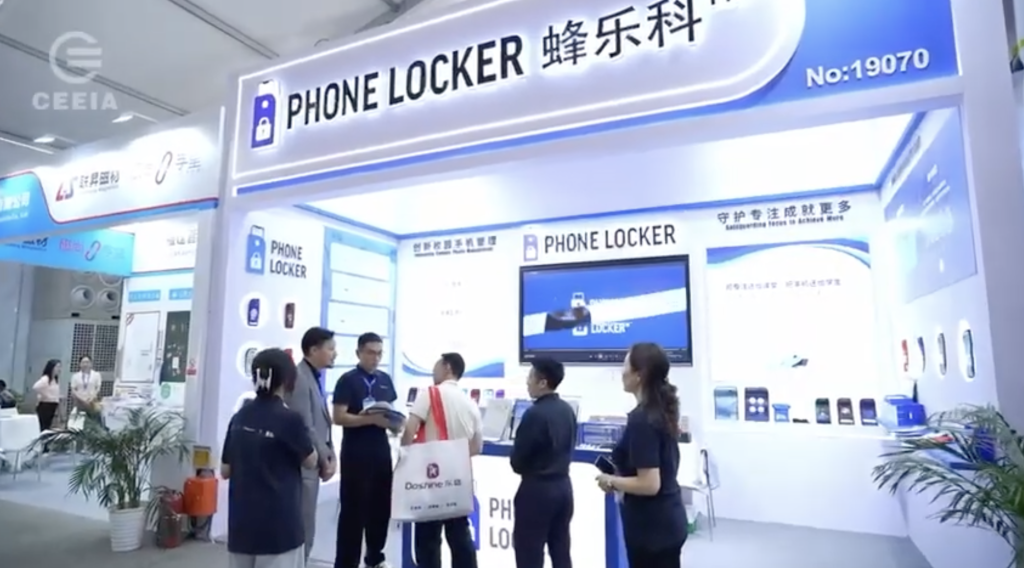
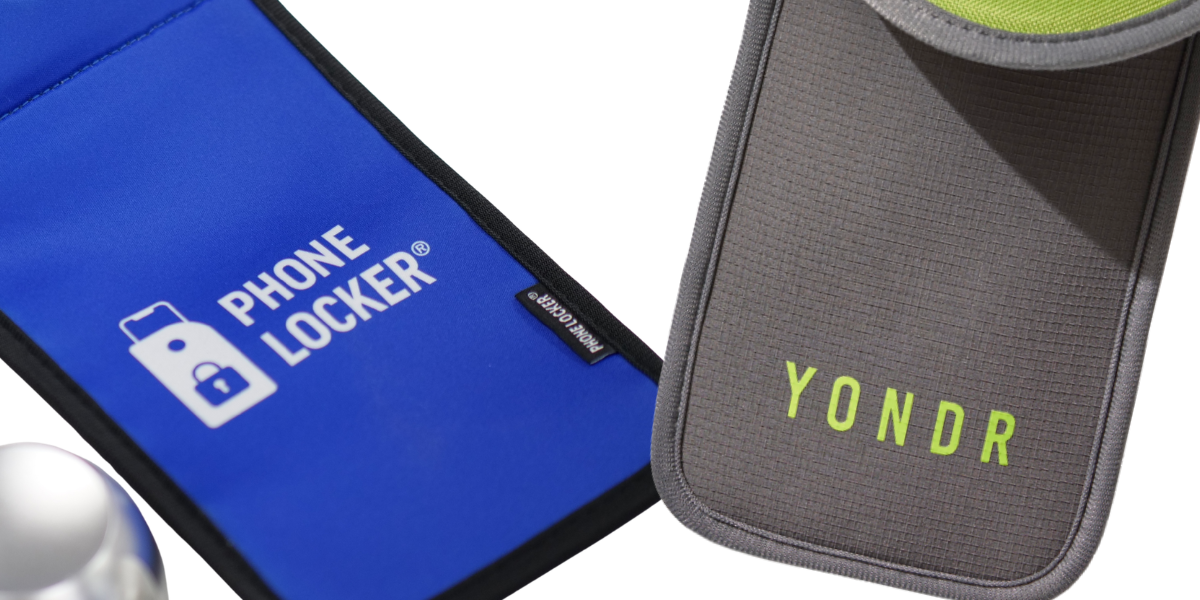
At the 87th China Educational Equipment Exhibition in Chengdu, themed “AI-Led Quality Development in Educational Equipment,” Phone Locker® made its first appearance on the Chinese stage. Already established in over 30 countries—including the UK, Australia, Canada, and across Europe—the brand’s return to its country of origin marks a significant milestone in its journey.
At the centre of this story is Bryan Deng, Founder and CEO of Phone Locker®, speaking with china.com, who shared the philosophy behind a product that is as much about human behaviour as it is about technology.
Read the interview here:
A Conversation with Bryan Deng, Founder & CEO
Standard interview transcript · Chengdu, China · April 2026
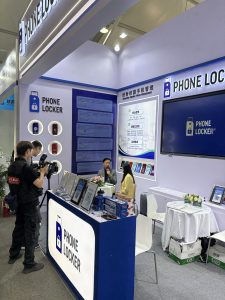
Interviewer: Welcome, everyone. We’re live at the 87th China Educational Equipment Exhibition, and we’re delighted to be here at the booth of PANGEA International Business Services (Guangzhou). With us today is the company’s founder and CEO, Bryan Deng. Bryan, it’s a pleasure to have you. Could you start by telling us a bit about Phone Locker® — the brand, where it sits in the market, and what brought you to this exhibition?
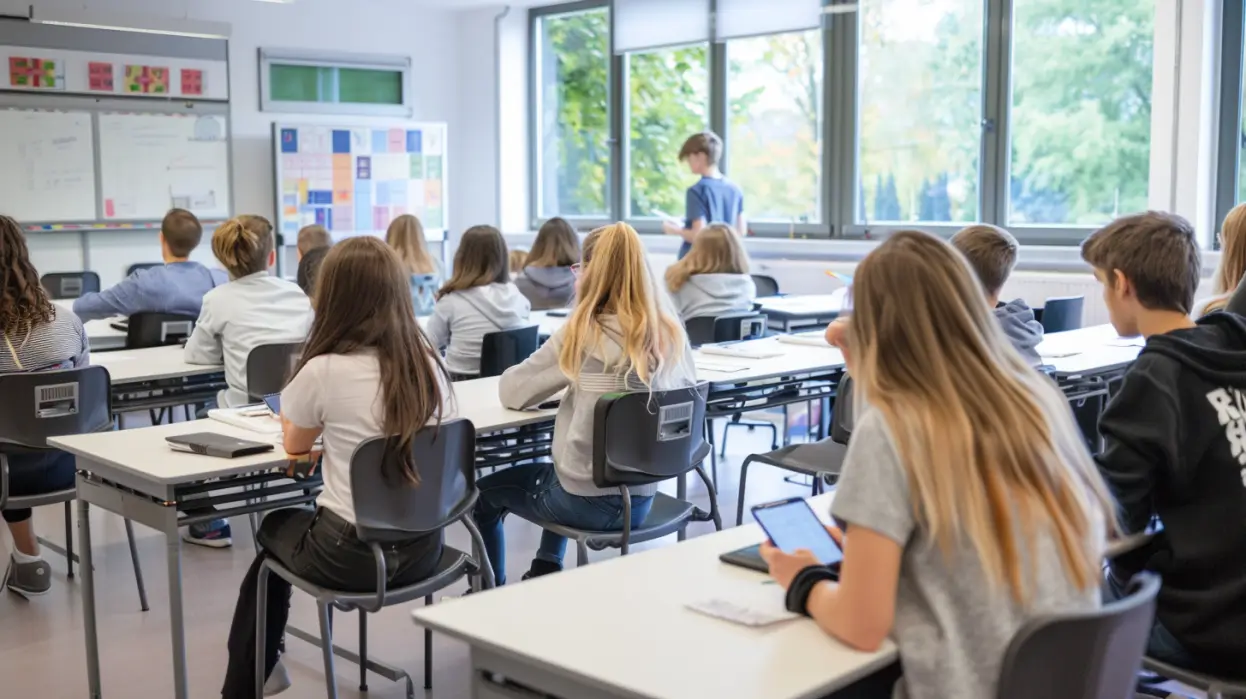
Bryan Deng: Thank you. Phone Locker® has actually been operating overseas for many years now. We’ve been selling across the UK, Australia, Europe and Canada, and the brand has built a strong reputation in these markets — helping local schools and educational organisations address the issue of excessive phone use among students.
The reason we’re exhibiting here is that this is our very first time presenting at this expo in China. The product is partly developed and produced in China as well, so we’re genuinely excited to bring it to everyone at the show — and to see what people here discover in it.
Interviewer: This year’s expo is focused on AI and quality development in education. How does Phone Locker® speak to that theme?
Bryan Deng: Honestly, AI is something all of us are having to face, and it’s a difficult question to answer — because everyone has a different understanding of AI, and therefore a different view on it.
But from our perspective, we always come back to the principle of being human-centred — especially given that this is an education product. If adults are finding AI challenging, then children almost certainly need more support in this area.
The way we encounter all things digital — including AI and robotics — tends to be through the phone. So if we can find a way to actively and effectively share governance with students around this device, it gives students, teachers, and parents a much greater sense of security.
Once you manage that medium well, you also help students build a healthier relationship with AI and intelligent agents going forward. I think over the next decade or two, the children growing up today will be interacting with AI every single day — that’s a very different reality from the one we grew up in.
Interviewer: School leaders often worry that confiscating phones creates conflict between teachers and students. How does Phone Locker®’s trust-and-co-governance approach help to ease that?
Bryan Deng: Yes — at the heart of what we do, there’s a core philosophy: focus, trust, co-governance, and growth. And there are a lot of lovely stories tied to this.
Not long ago we received a wonderful message — a German child, around ten years old, wrote to us in German on social media. The message was, roughly: “How could you be so mean, inventing this thing!” It was a very sweet joke, of course.
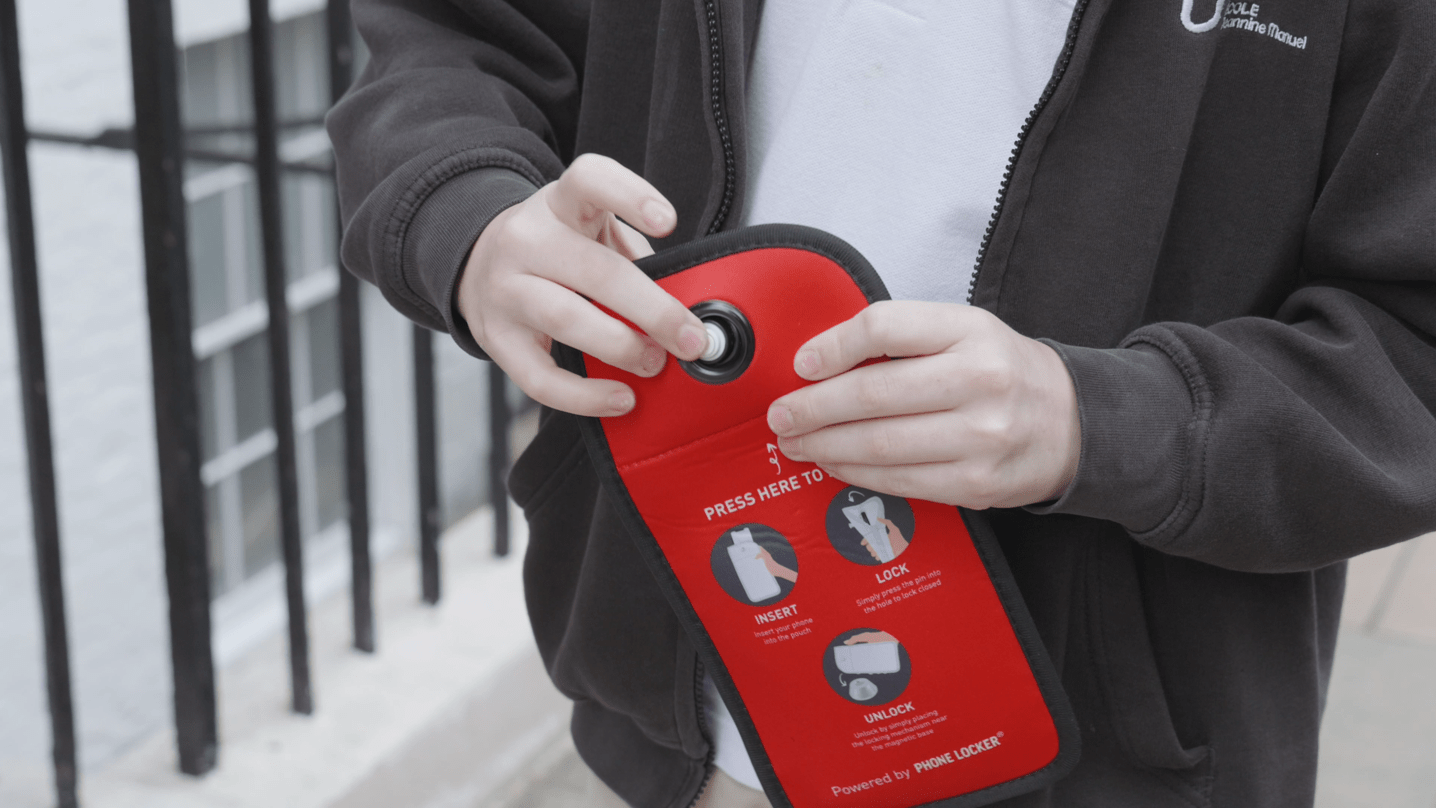
But at the same time, we’ve had so many students tell us that the product actually makes them happy. We’ve seen children proudly showing us their phones inside the pouch — and on TikTok abroad, some of those clips have racked up tens of thousands of likes.
I genuinely think this is a story about growth. When we’re young, everything seems cool. As we grow up, we start to take things seriously. So much of how teachers and parents communicate with children is about gradually learning to consider the other person, rather than just oneself — and that’s when things become more thoughtful. To me, that is the relationship of growth.
Getting that relationship right is what really matters — and it’s where our product differs from many traditional approaches. The traditional model is to take the phones away and lock them up centrally. Our philosophy is different: this isn’t only about a child’s self-discipline — it’s something parents, teachers, and society need to address together, in a more social way.
In that context, we let trust and co-governance do the work. Phone Locker® offers convenience, of course — you can manage phones effectively without confiscating them — but at its core, the product is about reinforcing mutual trust.
We don’t take the child’s phone away. It stays with them. And after long-term use, psychologists and education researchers studying schools have found that children naturally develop a kind of unspoken agreement among themselves. You’ll hear them say things like, “Let’s all keep our phones put away — let’s not take them out.” They come to recognise that this is good for them, and they collectively look after that learning environment.
That’s reassuring for parents — and the children themselves genuinely enjoy the product. That part has been a real surprise for us. In interviews abroad, so many children have told us how much they love it.
Interviewer: Phone Locker® doesn’t only focus on management efficiency — it also embraces a strong social-enterprise ethos. What’s the brand thinking behind that?
Bryan Deng: This has been a real challenge for us. As a business, of course you have to think about commercial operations first. The product itself came from genuine needs in the education sector — we developed it together with our clients.
In the early days, we didn’t think about all of this consciously. But our company culture has always leaned towards getting involved in things that benefit society. And as we worked more closely with children and educators, we gradually realised the weight of responsibility we were carrying.
This product was never going to be a pure commodity. Beyond being a solution, it has very strong social-enterprise characteristics — and that means we need to think about a lot more than just running a business.
I’d like to share something from an acquaintance of mine — Dr. Göran Carstedt, the former President of Volvo Sweden and IKEA North America and Europe. He’s a key figure in advancing ESG thinking globally, including in Asia, and he has a deep love for China. He often says that China, in this new era, will make a tremendous contribution to global ESG development.
There’s one thing he said that really stayed with me:
“If a company exists only to pursue profit, it’s like saying a person lives only to pursue water and air. There ought to be more than that.”
When we spoke, his advice to me was simply: “Just do this well, and do it right.”
We’re living in a remarkable era — information is incredibly open. Through platforms like TikTok and Xiaohongshu, audiences pay attention to what companies are doing. In an age this transparent, whether a company takes on social responsibility, whether it brings something good into the world beyond just profit — that has become genuinely important.
It also gives all of us a real opportunity to be a force for good. I think that’s something to be excited about. Many of our younger colleagues are here because they want to be part of something with purpose and ambition.
Interviewer: Finally, Bryan — what are your hopes for this exhibition and for Phone Locker®’s next chapter? What kind of partnerships are you looking to build with the education community?
Bryan Deng: Yes — this is our first time exhibiting in China. After years of building experience overseas, we’re finally bringing the product home for the first time.
I was born in Guangzhou, left for school abroad at 17, came back in my twenties to start a business, and have spent my career in international trade and educational product development. So I’m genuinely looking forward to being able to contribute, in some small way, to society and to my country — and to explore what’s possible together with everyone here at the show and across the wider education community.
The product has already been validated in many markets abroad — including Japan and Singapore. Now that we’re finally bringing it home, our hope is simple: that it will benefit children, parents, and teachers alike.
We come back with a real spirit of humility — eager to learn from everyone, and to explore the road ahead together with fellow educators.
Interviewer: Thank you so much, Bryan, for sharing all of this with us. We wish PANGEA every success with this first appearance at the expo. Thank you.
Watch the interview:
Looking Ahead: Collaboration and Growth

As Phone Locker® enters the Chinese education market, the focus is not just on expansion, but on collaboration.
The goal is to work closely with scuole, educators, and policymakers to develop approaches that reflect local needs while maintaining the core principles that have proven successful globally.
Because ultimately, this isn’t just about managing phones.
It’s about:
- Supporting student development
- Creating better learning environments
- Helping the next generation build a healthier relationship with technology
And in an age where attention is constantly under pressure, that might be one of the most important lessons schools can teach.
Interested in creating a more focused, phone-free learning environment?
Discover how Phone Locker® is helping schools across the UK and beyond transform their approach to mobile phone management, contact us today.




 Italian
  English
  Spanish
  Portuguese
  French
  German
  Chinese