

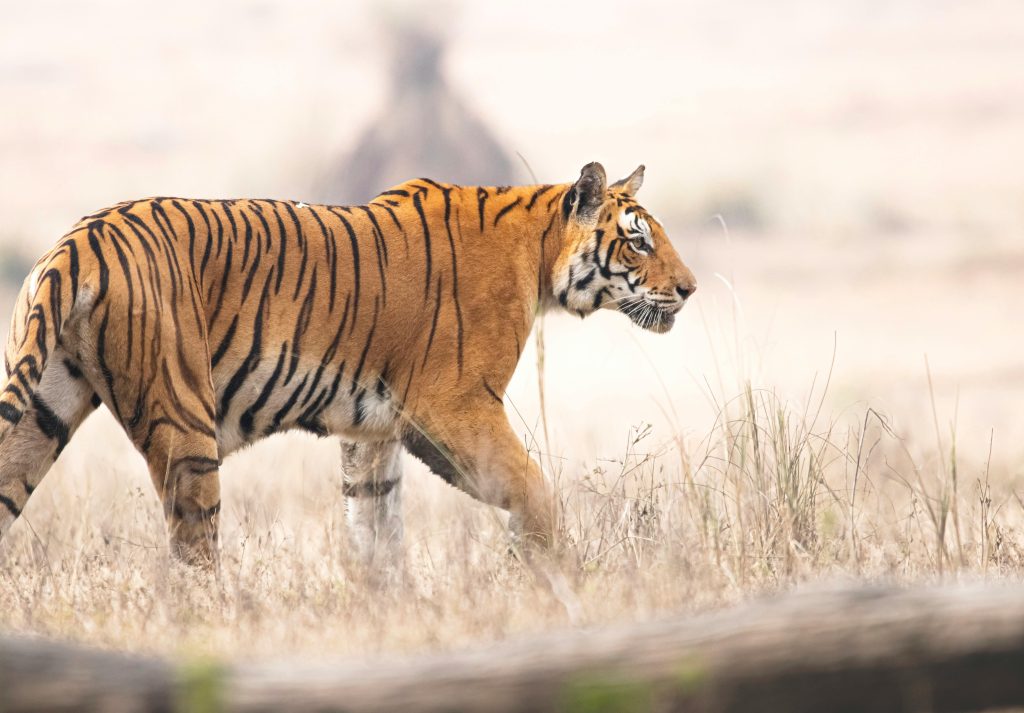
印度老虎保护区禁止使用手机,以保护野生动物并恢复野生动物观赏体验。

Spotting a tiger in the wild is one of the most unforgettable travel experiences in the world. But if you’re heading on safari in some of India’s most famous national parks, there’s a new rule that might surprise you: mobile phones are no longer allowed inside several major tiger reserves.

The decision reflects a growing global conversation about how smartphones are shaping the way people experience nature. In India’s protected forests, authorities say the rise of filming, livestreaming and social media sharing has begun to disrupt wildlife behaviour and the delicate balance of these habitats.

By removing phones from safari drives, park officials hope visitors will focus on what matters most: being present in one of the world’s most extraordinary natural environments.

Why Phones Are Being Banned in Tiger Reserves

India is home to more than 3,000 wild tigers, making it one of the most important countries for tiger conservation. Many of these animals live in protected national parks that attract thousands of visitors each year hoping to catch a glimpse of the elusive Bengal tiger.

But in recent years, forest officials have noticed a shift in visitor behaviour driven by smartphone use.

When a tiger is spotted, safari vehicles can quickly converge on the same location as tourists attempt to film videos, take photos or livestream the sighting. In some cases, visitors have even called other drivers or guides to share the exact location of an animal.

Officials warn that this behaviour can create chaotic scenes within areas that are meant to remain quiet wildlife habitats.

How Smartphones Can Disturb Wildlife

According to forest authorities, the problem isn’t just the phones themselves, it’s the behaviour they encourage.

When multiple safari vehicles rush toward the same location, the results can include:

  • Engines idling near wildlife
  • Crowds gathering around a single animal
  • Vehicles blocking natural movement routes
  • Increased noise inside protected forest zones

These disturbances can affect animals such as tigers, leopards and deer, potentially altering how they move through their habitat.

Protected areas are designed to preserve the natural rhythms of the forest, and officials say reducing human disruption is essential for wildlife conservation.

How the Phone Ban Works

Under the new policy, visitors are not allowed to carry or use mobile phones during safari drives in several major reserves using a phone-free solution such as a 可上锁手机袋.

In many parks, guests must leave their phones at the entrance gate before entering the safari zone. In others, devices are handed to drivers or guides for safekeeping until the drive is complete.

The rule is intended to prevent behaviour that has increasingly disrupted wildlife sightings in recent years, including filming animals at close range or alerting other vehicles to the location of a sighting.

Without phones, visitors are encouraged to experience the safari through observation rather than through a screen.

Where Phones Are Now Restricted

The phone ban applies to several of India’s most well-known tiger reserves, including:

  • Ranthambore National Park (Rajasthan)
  • Bandhavgarh National Park (Madhya Pradesh)
  • Kanha National Park (Madhya Pradesh)
  • Pench National Park (Madhya Pradesh / Maharashtra)
  • Satpura National Park (Madhya Pradesh)
  • Panna National Park (Madhya Pradesh)
  • Tadoba-Andhari Tiger Reserve (Maharashtra)
  • Umred Karhandla Wildlife Sanctuary (Maharashtra)

These parks are among the most popular safari destinations in India and are considered some of the best places in the world to see wild tigers.

A Reminder to Experience Nature Fully

The decision to restrict phones highlights a wider shift in how people think about technology in natural spaces.

Across the world, national parks and wildlife reserves are grappling with the challenge of balancing tourism, conservation and the rise of smartphone culture.

While cameras have long been part of wildlife safaris, the instant sharing and constant connectivity of modern devices can change how visitors behave in sensitive environments.

By removing phones from safari drives, park authorities are encouraging travellers to do something increasingly rare: observe wildlife without distraction.

The Value of Being Present in Nature

For many travellers, a wildlife safari is a once-in-a-lifetime experience. Seeing a tiger emerge silently from the forest, watching deer move through the grasslands or listening to the sounds of the jungle at dawn are moments that are difficult to capture fully through a screen.

Without the pressure to film or photograph every encounter, visitors may find themselves paying closer attention to the environment around them.

The rustle of leaves, the alarm calls of birds, the distant movement of animals through the trees, these details often become more vivid when technology fades into the background.

And in places designed to protect some of the planet’s most remarkable wildlife, that sense of presence may be exactly the point.

发表回复

您的邮箱地址不会被公开。 必填项已用 * 标注

zh_CNChinese