

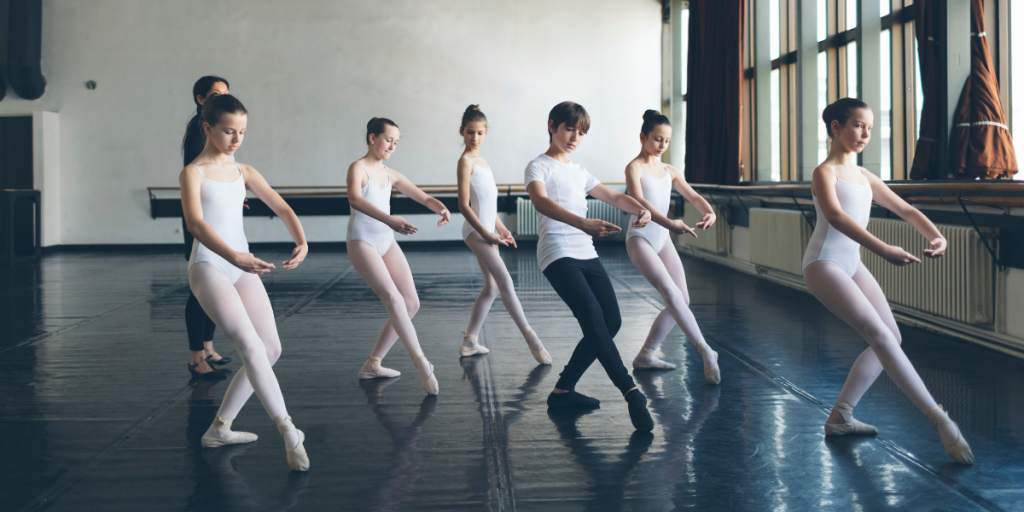
Dance training has always been built on discipline, repetition, and presence. Whether it’s ballet, contemporary, or commercial dance, the expectation is the same: focus fully on the room, the music, and the instruction.
Increasingly, dance colleges and higher education performing arts schools are asking a simple question: does the presence of phones support that focus, or quietly disrupt it?
For many institutions, the answer is leading to a rethink of how phones are managed in studios, rehearsals, and performance training environments.
Why phone use in dance training matters more than it seems
In higher education dance environments, students are adults. Trust is assumed, responsibility is expected, and phones are often allowed in principle.
But in practice, phones can introduce subtle distractions:
- Notifications breaking concentration mid-rehearsal
- Students checking recordings instead of embodying corrections
- Reduced eye contact and studio awareness
- Fragmented focus during short, intensive training blocks
Even in a 60 to 120 minute session, these interruptions add up.
Dance training relies on continuous attention. The moment focus is split, the quality of repetition changes.
The value of uninterrupted studio time
A dance class or rehearsal is one of the few environments where full immersion still matters.
Whether it’s a ballet barre session or a contemporary choreography run, students benefit from:
- Immediate correction from tutors
- Continuous physical engagement without cognitive distraction
- Shared group timing and spatial awareness
- Building performance confidence in real time
When phones are removed from the space, the shift is noticeable. Students listen differently. They respond faster. The energy of the room becomes more cohesive.
Ballet schools and structured discipline environments
Institutions like ballet schools and vocational training centres already operate within strong behavioural frameworks. That structure makes phone-free approaches more practical than in many other éducation settings.
In environments similar to schools such as Italia Conti and other UK dance conservatoires, the focus is already on professional standards. Students are preparing for industry careers where attention, discipline, and adaptability are essential.
In that context, structured phone management is less about restriction and more about replicating professional rehearsal conditions.
The impact on performance quality and feedback
One of the most overlooked benefits of phone-free dance environments is the quality of feedback.
When students are not pausing to record or replay sections, they:
- Internalise corrections in real time
- Stay physically engaged through entire combinations
- Reduce self-consciousness during experimentation
- Develop stronger memory of movement sequences
Tutors also benefit from uninterrupted teaching flow, rather than competing with screens for attention.
Adult learners, but still distraction-prone
Higher education students are trusted with responsibility, but that doesn’t mean distraction disappears.
In fact, in creative disciplines, phones can feel even more integrated into the workflow: filming choreography, reviewing counts, or checking notes.
The challenge is that “useful” phone activity often blends into unnecessary checking. Over time, that reduces the intensity of studio focus.
The hidden cost of “just having it nearby”
Research consistently finds that attention is what is often described as the “mere presence effect”. Simply having a smartphone within reach can reduce attentional control and increase mind-wandering, even when it is not being used.
In dance training, where students are expected to absorb corrections instantly and repeat movement accurately, that split in attention can quietly affect the quality of learning.
It is not always visible in the moment, but it shows up in repetition, retention, and consistency.
This is where Coffre-fort téléphonique® becomes a practical tool for dance colleges and performing arts schools.
It supports institutions by:
- Creating simple, secure phone-free studio sessions
- Reducing distraction without requiring enforcement by tutors
- Helping students stay fully engaged in short training blocks
- Reinforcing professional rehearsal discipline
Rather than relying on policy alone, Coffre-fort téléphonique® offers a physical system that makes phone-free training straightforward and consistent.
The opportunity for dance colleges
For higher education dance providers, the opportunity is not about removing technology from learning altogether. It’s about choosing when focus matters most.
A 90-minute rehearsal. A technical class. A performance workshop.
These are moments where full attention changes outcomes.
And in environments already built on discipline and craft, removing digital interruption may be one of the simplest ways to improve training quality, student confidence, and overall performance standards.
Interested in creating a phone-free environment? Contact Phone Locker® today to explore how this solution could work for your space.






 French
  English
  Spanish
  Portuguese
  Italian
  German
  Chinese