


Schools continue to evaluate how best to manage smartphone use, balancing the benefits of technology with its impact on focus, behaviour and wellbeing.
Recent reporting by BBC News highlights the experience of schools in the Netherlands, where a coordinated move to restrict phone use is now showing measurable results.
A Coordinated Approach Across Schools
In 2024, Dutch schools introduced a nationwide agreement to remove smartphones, smartwatches and tablets from classrooms and, in many cases, from wider school environments.
Rather than a strict legal ban, the approach was developed collaboratively between government, educators and parents. This has enabled schools to implement changes with consistency and support, rather than enforcement alone.
Measurable Improvements in Focus and Behaviour
Early findings from a government-commissioned study across more than 300 secondary schools indicate clear trends:
- 75% of schools reported improved student concentration
- Nearly two-thirds saw improvements in the social environment
- Around one-third observed better academic performance
These results suggest that reducing access to phones has a direct and positive impact on how students engage with learning.
Strengthening Social Interaction
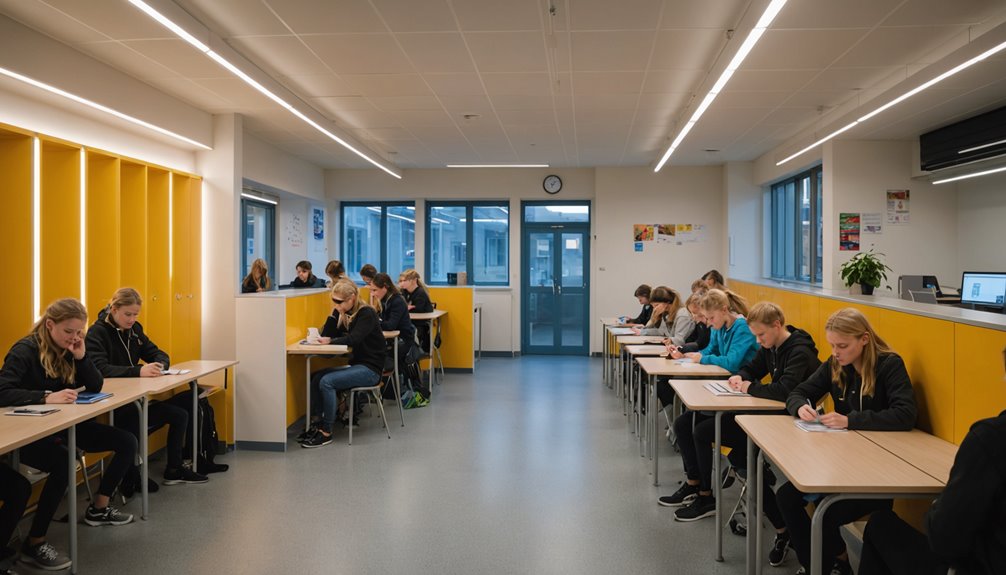
Alongside academic improvements, schools reported noticeable changes in student behaviour and interaction.
With fewer digital distractions, students are:
- More engaged in classroom activity
- More likely to communicate face-to-face
- More present during the school day
This shift supports not just learning outcomes, but the overall school environment.
Student Attitudes Are Shifting
Importantly, student perspectives appear to be evolving.
Research cited in the report found that a majority of young people in the Netherlands support tighter controls on digital access, including restrictions on social media for under-18s.
This reflects a broader awareness of the challenges associated with constant connectivity.
A Wider Policy Direction
The Dutch government is now considering further measures, including minimum age requirements for social media use across the EU.
While these discussions extend beyond schools, they reinforce a clear direction of travel: more structured boundaries around device use for young people.
Implications for Schools
The evidence from the Netherlands provides a practical insight for school leaders: Reducing phone access can improve concentration, behaviour and the overall learning environment.
The key consideration is not simply whether to restrict phones, but how to do so in a way that is consistent, practical and sustainable.
Supporting Effective Implementation
Successful approaches tend to share common characteristics:
- Clear and consistent expectations
- Removal of temptation during the school day
- Systems that are easy for staff and students to follow
Structured solutions, such as secure phone storage, can support schools in embedding these routines while minimising disruption.
The experience in the Netherlands demonstrates that limiting phone use in schools can lead to meaningful improvements across multiple areas.
For schools reviewing their approach, the focus is increasingly on creating environments where students can engage fully, both academically and socially, without the constant presence of personal devices.








 English
  Spanish
  Portuguese
  French
  Italian
  German
  Chinese